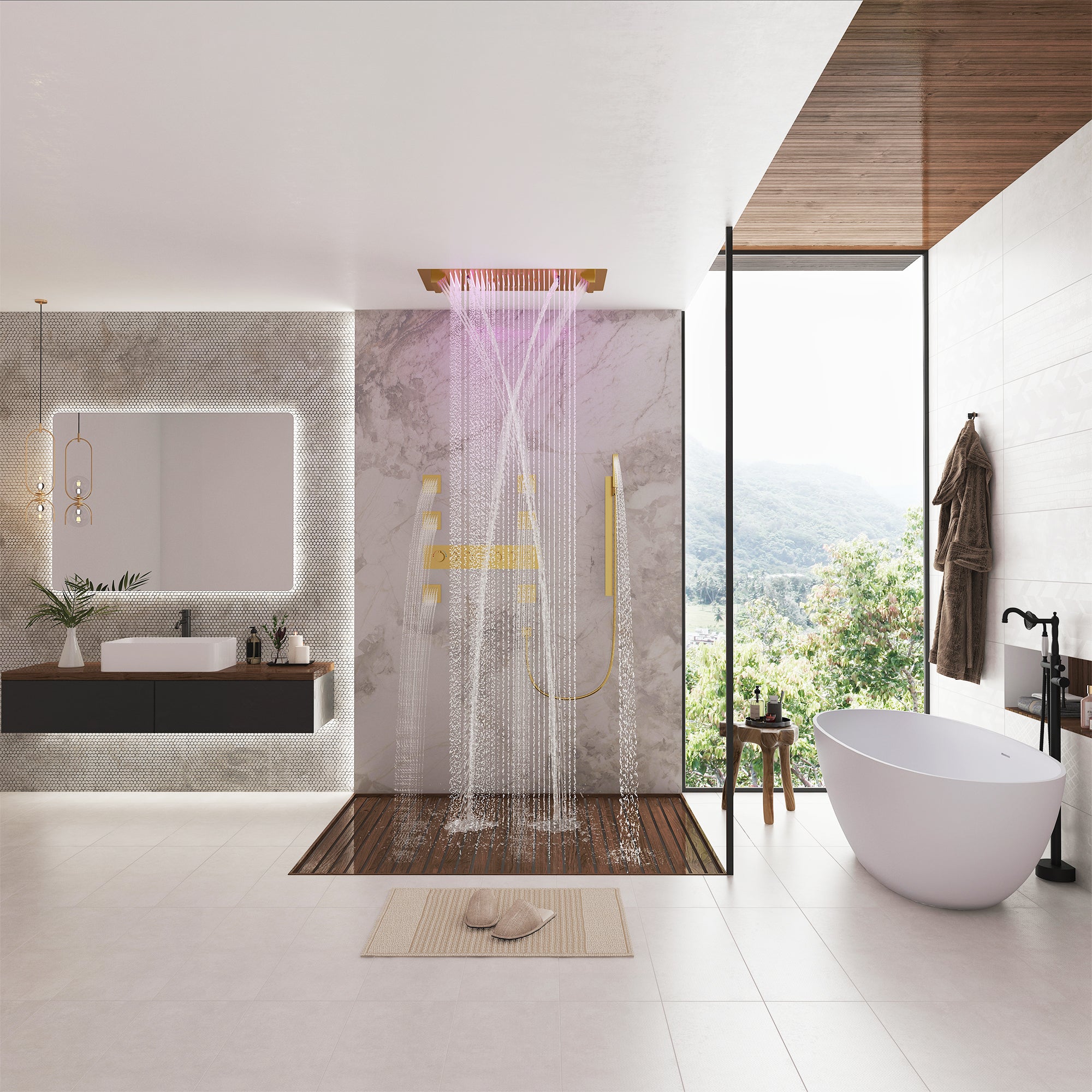
Planning a bathroom makeover or just refreshing your fixtures? The right faucet selection can transform both the functionality and aesthetic of your space. This comprehensive guide walks you through everything you need to know about bathtub faucets and shower faucets.
Bathtub Faucet Options
Perfect for standalone tubs like clawfoot or modern soaking tubs, freestanding faucets mount directly to the bathroom floor. Their tall design arcs gracefully over the tub's edge, with exposed plumbing that adds architectural interest. Available in single, double, or triple-handle configurations, many models include handheld shower attachments for added convenience.


The Roman faucet brings timeless elegance with its signature three-piece design: a central spout flanked by symmetrical handles. These versatile fixtures suit both traditional and contemporary bathrooms and install directly onto the tub's rim or the surrounding platform of drop-in models. Many versions feature handheld sprayers for enhanced functionality.

When you need a space-efficient solution, wall-mounted faucets deliver. The plumbing runs concealed behind the wall, with only the spout and controls visible. They're ideal for alcove installations, drop-in tubs, or freestanding tubs positioned near a wall. Choose from one to three handles based on your design preference and control needs.


Shower Faucet Varieties
Designed specifically for shower stalls without tubs, these systems include the control valve and showerhead. Their minimalist two-component design maximizes space in smaller enclosures. Select from fixed overhead units, flexible handheld wands, or luxurious rainfall-style heads.

Combination Tub-Shower Faucets (Shower Faucets with Tub Spout)
For bathrooms where the shower and tub share space, combination units provide dual functionality. These complete sets include a showerhead, control mechanism, tub spout, and a diverter valve that seamlessly switches water flow between bathing and showering.


Installation Methods
Wall-Mount: The most common installation approach, wall-mounting takes advantage of existing plumbing behind shower walls. The showerhead directs water at an angle toward the user.


Ceiling-Mount: For a spa-like experience with water cascading straight down, ceiling installation is ideal, especially for rainfall showerheads. This option typically requires professional plumbing work to properly position water supply lines overhead.
Key Components and Features
Valve Systems
The valve is the heart of your faucet, regulating water flow, temperature, and pressure. Thermostatic valves offer superior temperature control and the ability to adjust volume and temperature separately but are typically more expensive and have a more complex installation. Pressure balance valves are more budget-friendly, simpler, and often have a single handle for both temperature and volume, making them a practical choice for many.


Diverter Mechanisms
Essential for tub-shower combinations, diverters redirect water between the tub spout and showerhead. These come as levers, pull-up tabs, or separate control knobs. Handheld showers also function as diverters, letting you direct spray exactly where needed.
Handle Configurations
Single-Handle: Offers simplified temperature and flow control with one motion.
Two or Three Handles: Provide separate hot and cold water control, with a third handle for diversion when applicable.
Style options include classic cross handles, modern lever designs, and traditional round knobs, giving you countless aesthetic possibilities.

Materials and Finishes
Ready to Install?
Once you've selected the perfect faucet, proper installation ensures optimal performance and longevity. Whether you're tackling the project yourself or prefer professional installation, make sure to follow manufacturer specifications carefully.